How Do Scavenger Hunts Work? What 25 Years of Running Them Taught Me
Most people picture a list of objects and a race to find them, and that version stops working the minute you try it with a company. Here's how a scavenger hunt actually works when it's built for a team.
Scavenger hunts have been the core of what I do for more than 25 years. cityHUNT started in 2001 as a scavenger hunt pub crawl. Almost every planner who calls us asks the same thing first. How does this actually work, and what stops it from turning into chaos?
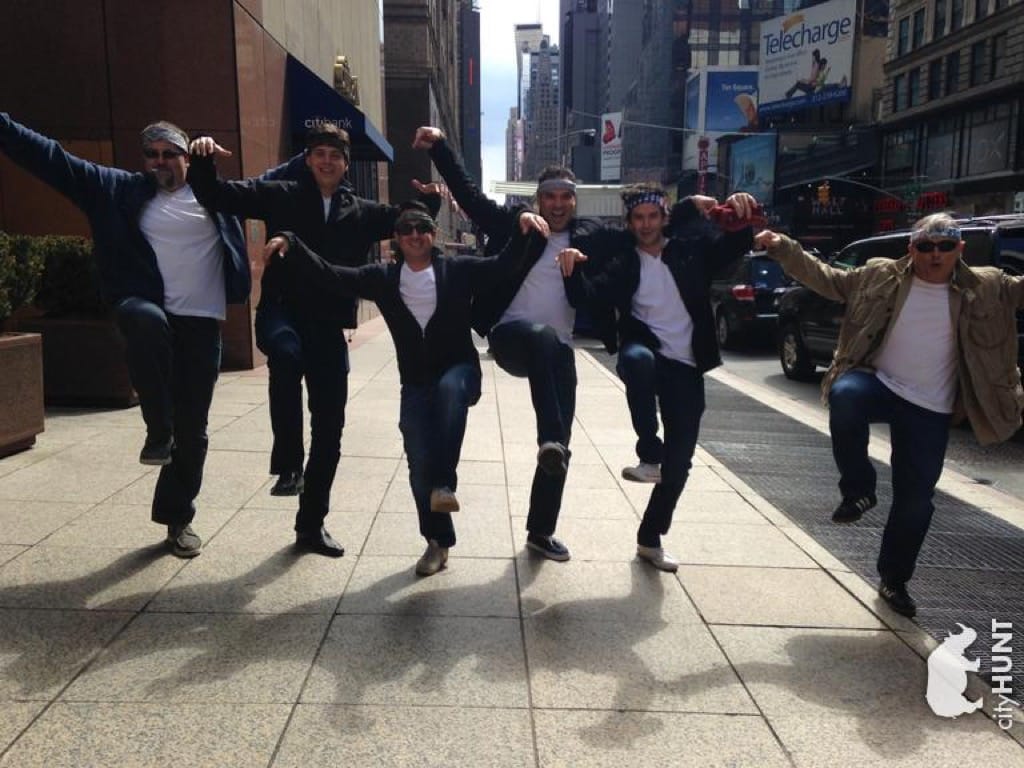
Here's the short version. You break the group into teams of four to six, and every team gets the same game. That game has more tasks than anyone could finish, and each one is worth a different number of points. A team proves they did a task with a photo, a video or the answer to a puzzle. Because no team can do all of it, every team has to decide what to go after. That conversation, usually happening on a street corner, is where the team building is. When the clock runs out, the most points wins.
Why Adults Should Never Hunt for Objects
I learned this one early. If you send a group of adults into a city to find physical objects, it turns into a disaster.
People take things they shouldn't, and then the competition goes the wrong way. Once a team finds an item on the list, the smart move is to take it so nobody else can get it. Now you've got a game where the way to win is to sabotage everybody else.
So we keep physical scavenging to a minimum. Instead, a team takes a photo that proves they did the task. That's how cityHUNT worked from the beginning, with Polaroids, then digital cameras, then iPods, and now people just use the phones they're already carrying. Once video came along it opened up a whole new kind of challenge, where you work out where you need to be, get there, do something together as a team and record it.
Nothing goes missing and no team can block another. At the end of the day, the photos and videos turn out to be the part people keep.
A Scavenger Hunt Is Not a Treasure Hunt
People use the two words like they mean the same thing, but they're built in different ways.
A treasure hunt is a chain, where clue A gets you to B, B gets you to C, and C gets you to the treasure. Hand that chain to twenty teams at once and it breaks down, because everyone just follows the first team that figures out the clues.
In a scavenger hunt there's no chain, so every team gets the whole game from the first minute and plays it in whatever order they want. Teams end up scattered all over the neighborhood on different challenges, which means there's nothing to gain by following the team in front of you.
More Tasks Than Anyone Can Finish
The biggest thing in how we design a scavenger hunt is that people get more tasks than they could possibly get through.
Every task has its own point value and we put a time limit on it so every team needs to strategize what route is best for them. Do we chase the big task across the park, or pick off three small ones on this block? Who on the team is good with puzzles, and who's going to volunteer for the one where you have to perform?
This strategizing aspect serves as the whole point of this activity as the team has to talk and work together.
We keep the team size to four to six people as it's enough brainpower to solve real problems and still small enough that nobody drifts off to the sidelines. I go into that more in how to keep large groups connected during team building.
Clues Built for Every Kind of Brain
A good hunt mixes up the kinds of challenges, so everybody gets a moment where they're the one carrying the team.
There are location clues, which send teams to places they'd have walked right past otherwise. There are team tasks that only work when the whole group pulls together. And there are puzzle clues, where the team uses what's around them, like a sign, a date on a building or a detail on a statue, to solve something in the app. Some clients have fun company stories we can build in too, as long as it stays fun and never gets corny.
We spread the load across all of that on purpose. Some clues are for the extroverts and some are for the introverts, some are heavy on math and some on performance. That way the quiet analyst gets a turn to be the hero, the same as the person who'll happily sing in the street. If you design it any other way the loudest people end up running the whole thing, which is why most team building fails half your team.
Walking and Strategy, and Nobody Has to Run
Walking is the thing planners worry about the most, so before we design anything we get to know the group.
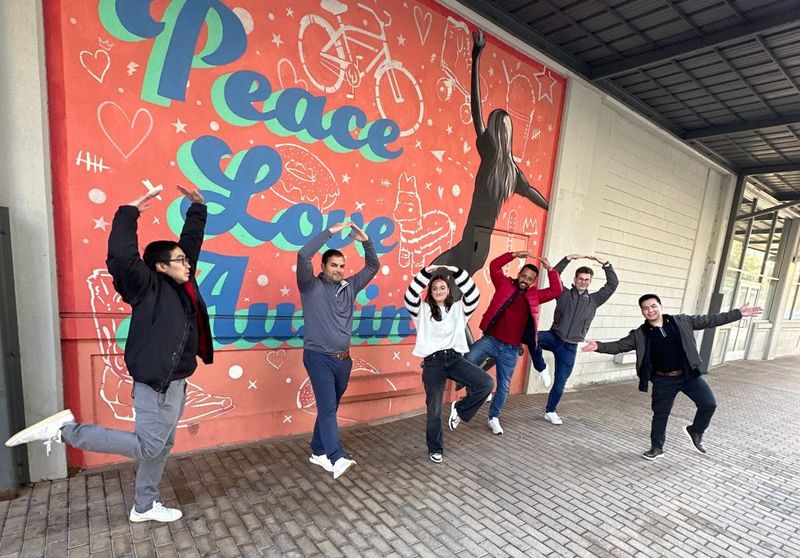
Most people are comfortable covering about a mile in two hours, which is a gentle pace. There's no running in our games, just walking and strategy.
If a group is concerned, we tighten the playing area and build in places to stop, so a team can duck into a café or a bar and keep solving clues while they sit. We've had pregnant players and people with a wide range of mobility needs, and when the game is designed around them it isn't an issue. If somebody can't come at all, they can join online as a virtual team member. They get challenges only they can complete and become their team's secret HQ.
The Hunt We Built Inside a Hotel Lobby
Neighborhoods are the obvious place to play, but we also build games in museums, zoos and parks. We play in old buildings turned into food halls too, like Reading Terminal Market in Philadelphia, Chelsea Market in New York and Ponce City Market in Atlanta. Every client gets an adventure producer who knows that neighborhood inside and out. The client also chooses where the game ends, which a lot of companies won't allow.
Sometimes a group can't leave the venue at all. Recently the weather turned so badly right before an event that the client wouldn't let anybody go outside. So we rebuilt the hunt inside the hotel lobby, and it turned out there was plenty in there to play with. It wasn't the plan, but the group still got their game.
Every modern scavenger hunt runs on an app, and I think this is where a lot of companies get it wrong.
We want the teams interacting with each other and not with our technology, so only one person on each team uses the app. They read the challenge out, and the whole team works it out together while everybody else's phone stays in their pocket.
Know Your Team Building Company
The feedback I love most sounds like this.
"I've worked with Bob from Accounting for five years, and I had no idea what a great person they were until today."
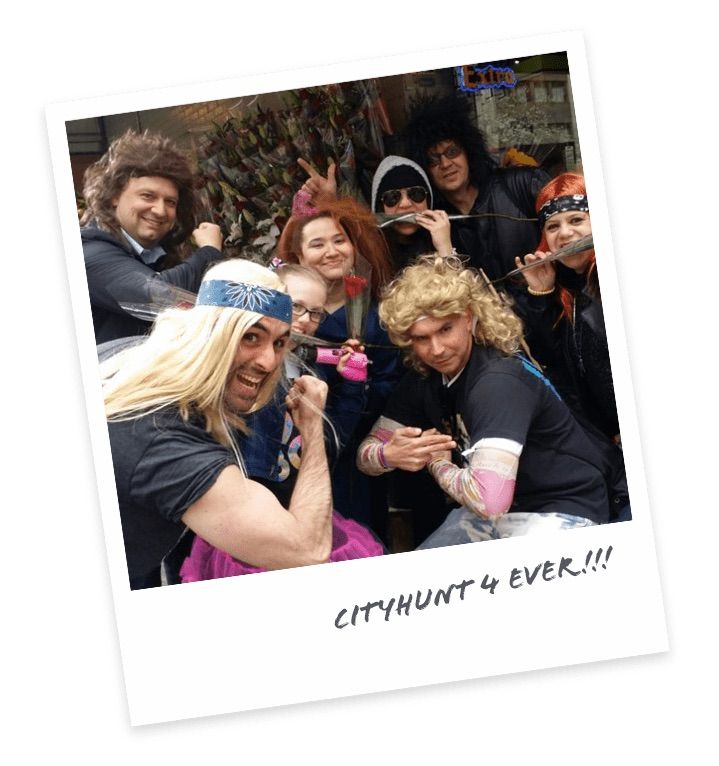
People are almost always surprised by how awesome their coworkers are. Work just never gives them a chance to be awesome together, but a well-built hunt does.
It can go the other way, though. A badly run event backfires into anti-team building, and I'm seeing more of that now that AI makes it easy for anybody to spin up an event company. Not long ago a client came back to us at the last minute because the vendor they'd booked ghosted them. We pulled it off, but honestly, we'd rather not be the hero. So know your team building company, and pick someone good, even if it isn't us.