Corporate Retreat Team Building Activities That Are Worth the Half Day
Most companies will only give you a few hours for team building. Here's how to spend them so people leave connected instead of annoyed.
When I think company retreat, I think multiple days, and unfortunately I'm seeing less and less of that. Since COVID the retreat has mostly been replaced by the offsite, and an offsite is a different animal. Same flights, same hotel, most of the time a lot less room for anybody to actually connect.
We do thousands of events a year, and the companies who are willing to invest in connection at all give us a half day. That's the world we're working in, so the question isn't what a perfect three day retreat looks like anymore but how to get the most bang for the buck out of an afternoon.
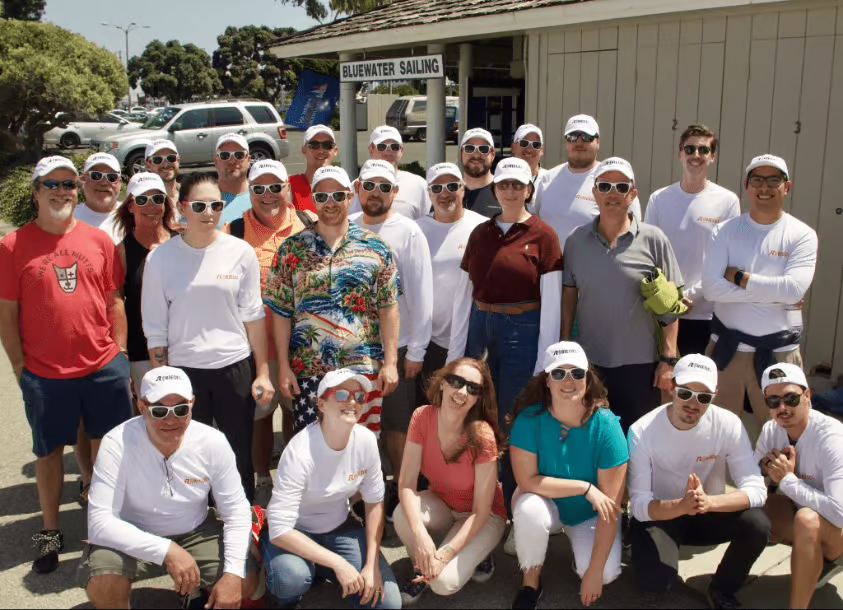
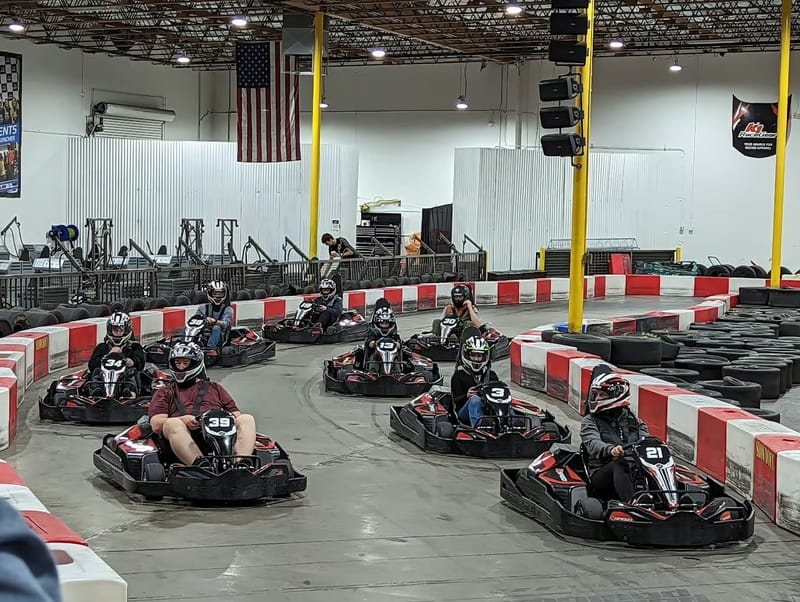
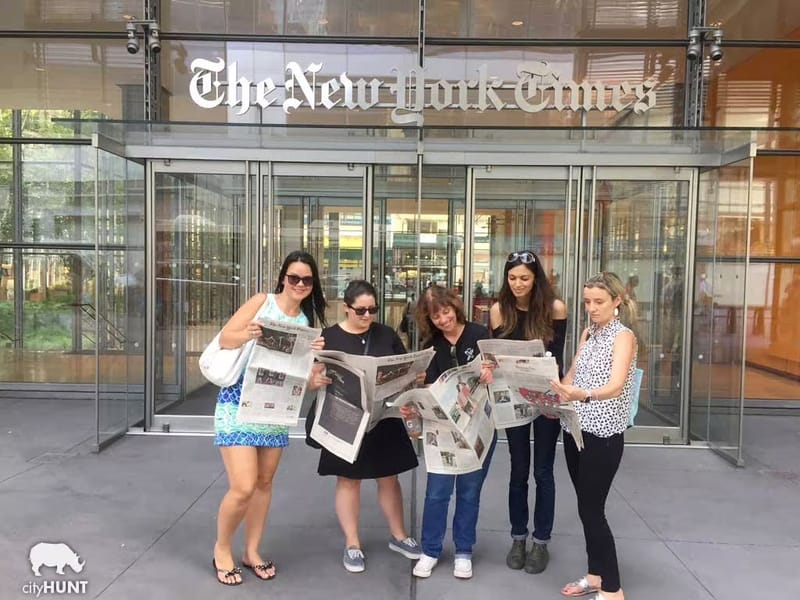
Here's the short version of what works. Get people out of the building and moving. Break them into small teams, but keep the whole group inside one game so nobody feels shipped off somewhere.
Build the tasks so everyone can actually participate, the intern and the CEO and the introvert and the extrovert, and give it enough time to be worth the ask, which in practice means half a day. Ten minutes of icebreakers is worse than doing nothing at all, and I'll explain why.
The Corporate Retreat Has Been Replaced by the Offsite
I'm seeing less and less corporate retreats every year and more offsites, and I'm seeing less time inside them given over to connection. The reasons aren't mysterious. Travel is more expensive. Hotels are more expensive. A lot of companies are funded now and they want something tangible to show for the trip, so the days fill up with business casework and presentations, and the connection piece gets whatever's left over.
That's the part I don't get, because connection is exactly what people want right now. Look around, people are joining clubs again, they're signing up for things, they're going out of their way for something real and in person. I'm seeing it everywhere. A lot of companies talk that way too. Most of them aren't willing to invest in it.
So the half day is what we're given, and the half day is what we plan for.
Corporate Retreat Team Building Activities Have to Earn Their Half Day
You flew people in, you paid for the hotel, you took them away from their families for three days, and then you sat them in a room and never let them see the city they were standing in.
Get them outside and get them moving. That one decision does more for a retreat than anything else on the agenda, and at the end of the day it's what people are going to be talking about.
The way you do that with a large group is to have everybody doing the same thing at the same time. Logistically that's the only way, and it's also the whole point, because that shared experience is what makes them feel like one company instead of nine departments.
But the actual work has to happen in teams of four to six people, because if you leave everybody in one big undifferentiated group, you're not going to get any personal connections out of it at all. That range comes out of team size research at Penn's Wharton School, and I've written about how it holds up at scale elsewhere.
However, I get why a planner gets nervous when I talk about small teams. They hear that and picture their two hundred people getting split into forty little groups who never see each other again, and honestly that's a reasonable thing to be afraid of, because that's exactly what most team building does, splitting people into breakout rooms and separate bays where everybody is technically at the same event and nobody is actually together. That isn't what I'm describing. Small teams inside one shared game keeps everyone together and keeps everyone participating at the same time, and you need both halves of that or it doesn't work.
Then you build the tasks so everyone can play. Introverts and extroverts. Different status levels at the company, different pay grades, the people who've been there fifteen years and the person who started on Monday. If the activity favors the loudest person in the room, you've designed half your group out of their own retreat.
The Chemical Equation Behind Team Building Activities for Corporate Retreats
It's not an accident when a retreat lands. People call it chemistry, and honestly they're closer to right than they know. It's a chemical equation, and it's got three parts.
Endorphins come from moving, which is why we get everybody up and walking around instead of sitting. Dopamine is the hit people get from completing tasks, so the game is built out of small solvable things rather than one long ordeal. On the other hand, oxytocin comes through connection and kindness, and that last one is the piece we weave through the whole event on purpose. That's our secret sauce.
I know I'm harping on this over and over. It's because I've tested the other things. In a few hours you're never going to hit everything for everybody, that's just true. But you can hit those three pretty consistently, if the event was designed for them in the first place and if a team building activity has none of them in it, I'm not really sure what it's doing.
Why Ten Minutes of Icebreakers Is Worse Than Nothing
People are tired of icebreakers. They think they're cheesy and lame, they're over them, and they can see that it's inauthentic.
So I fly out to a place, I leave my family, I leave my friends. I'm here for a few days, and this is a big ask. You want me to sit inside the whole time and never see the city I'm in, and then you're going to give me ten minutes of an inauthentic, stupid icebreaker. It's going to backfire. It's better to do nothing.
You want me to run a marathon and you're only giving me a thimble of water. Of course I'm going to get dehydrated. You've taken everybody's brain power for a week of meetings and presentations, and it's a give and take, so how are you going to fuel them? How are you going to keep these people hydrated emotionally, physically, mentally and relationally, not just for the retreat but for their whole time at the company? An inauthentic icebreaker isn't going to do it.
The minimum you need to do is a half day, outside, with everyone playing the same game. Half a day out of three.
An Open Bar Without a Plan Is a Plan for Disaster
I'm not against alcohol, honestly. What I'm against is unsupervised alcohol without a plan, because that is not team building.
People show up to these things stressed, and if there's unlimited alcohol it has a tendency to exacerbate whatever they already had going on with themselves and with each other. I've heard horror stories, fist fights breaking out at company events, companies having to hire security guards. That's the world we live in now, where people are so stressed that an open bar feels like a good way to unwind, and sometimes it's the opposite.
So quote me on this one. An open bar without a plan is a plan for disaster. There's a mindful way to have alcohol at an event, and it starts with the event being about something other than the bar. It's also why so much team building only works for half the room. If the connection is happening at the bar, then everybody who isn't drinking is standing outside of it.
The Mistakes That Make a Retreat Feel Like a Wasted Day
I have a lot of empathy for the HR managers planning these, because it's a huge responsibility and the risk is all theirs.
Think about what they're actually asking. COVID taught people how much they value time with their families and their friends, and they got very used to their lives. Now you're asking somebody to leave all of that and go spend three days with people they may never have met in person, only on a screen. That's a big risk, and if the days don't give them anything back, they'll notice.
There's a lot of fear on top of that, because there are a lot of really bad companies out there offering team building. It's become ubiquitous, and there's an enormous amount of slop out there, a lot of it generated. So if a planner tries to cheap it out on the wrong line item, it can be much worse than doing nothing at all. Instead of giving people a shot of water you've given them a shot of poison.
I've watched a group mutiny and the horror stories I hear are usually about HR people who are now scared to book anything at all, because they know a bad event can cost them their job. The fear is rational. A cheaper vendor is the wrong answer to it. You already spent all that money on the flights and the hotel and the food, and this is the line item that decides whether any of it paid off.
What Separates a Retreat People Remember From One They Forget by Monday
Honestly, if people forget the retreat by Monday, sometimes that's fine. The worst case is the retreat they still remember a year later because it was that bad. That's the real problem.
We all have human needs, right? If you're not giving a person a way to enrich themselves during the retreat, you've missed it. The value is in the in-person connection, and it comes in three directions. Connection with one another. Connection with the environment they're in and themselves, hopefully, so they can bring their best selves to work the next day and come back energized instead of drained.
So you have to look at it holistically. The mental part is handled, believe me, there are enough presentations. What are you doing for them physically and relationally? These are human beings. This isn't an AI, this isn't a retreat for robots, you can't just plug them in. Even at cityHUNT we run our own retreats the same way, body, mind and spirit. We still talk about numbers on those days. We just make sure the numbers aren't the whole of it.
If you're not going to leverage what it actually means to be in person, then don't spend the money. Just have everybody sit on Zoom.
The New York Retreat That Started With a Room of Angry People
I can't remember the exact company, but this was New York, around the recession. They had to move offices, there were layoffs going on, and the move was drastic enough that people were looking at a much longer commute or at moving house. So they hired us to run a retreat where their team could orient themselves in the new neighborhood.
At the start of that hunt, people were really pissed to be there. That's rare for us. There was real animosity in the room and some of it was aimed at us, like we'd made the decision about the layoffs and the building. By the end they were grateful. They were excited about the neighborhood, we'd shown them all this cool stuff they didn't know was there, and they'd spent an afternoon with the people they were about to be sharing a floor with.
Think about how easily that goes the other way. If we'd been off by just a little bit in a situation like that, it's a giant backfire. You make the neighborhood seem worse, you make the company seem worse, and you make the people they're going to work with seem worse. That's the risk in doing it badly, and it's why I'd rather a company skip the retreat than take it lightly.
What we did instead was the three things I say all the time: fun, connection and play. Get people connected with each other, with where they are, and with themselves, and let them play their way there. It just has to be designed, and it has to be given more than ten minutes.
If you're planning a retreat and you want the half day to be the part people remember, come find us at cityHUNT. We'll make the city the game.